
Freight & Logistics
How to Consolidate Shipments from Multiple Chinese Suppliers

By Alice Wu, CEO & Founder Published
Short answer
To consolidate shipments from multiple suppliers in China, have each supplier deliver to one warehouse by a set deadline, check every delivery against its PO, label each SKU, then ship everything together on one booking. This cuts the number of shipments and can make FCL worthwhile.
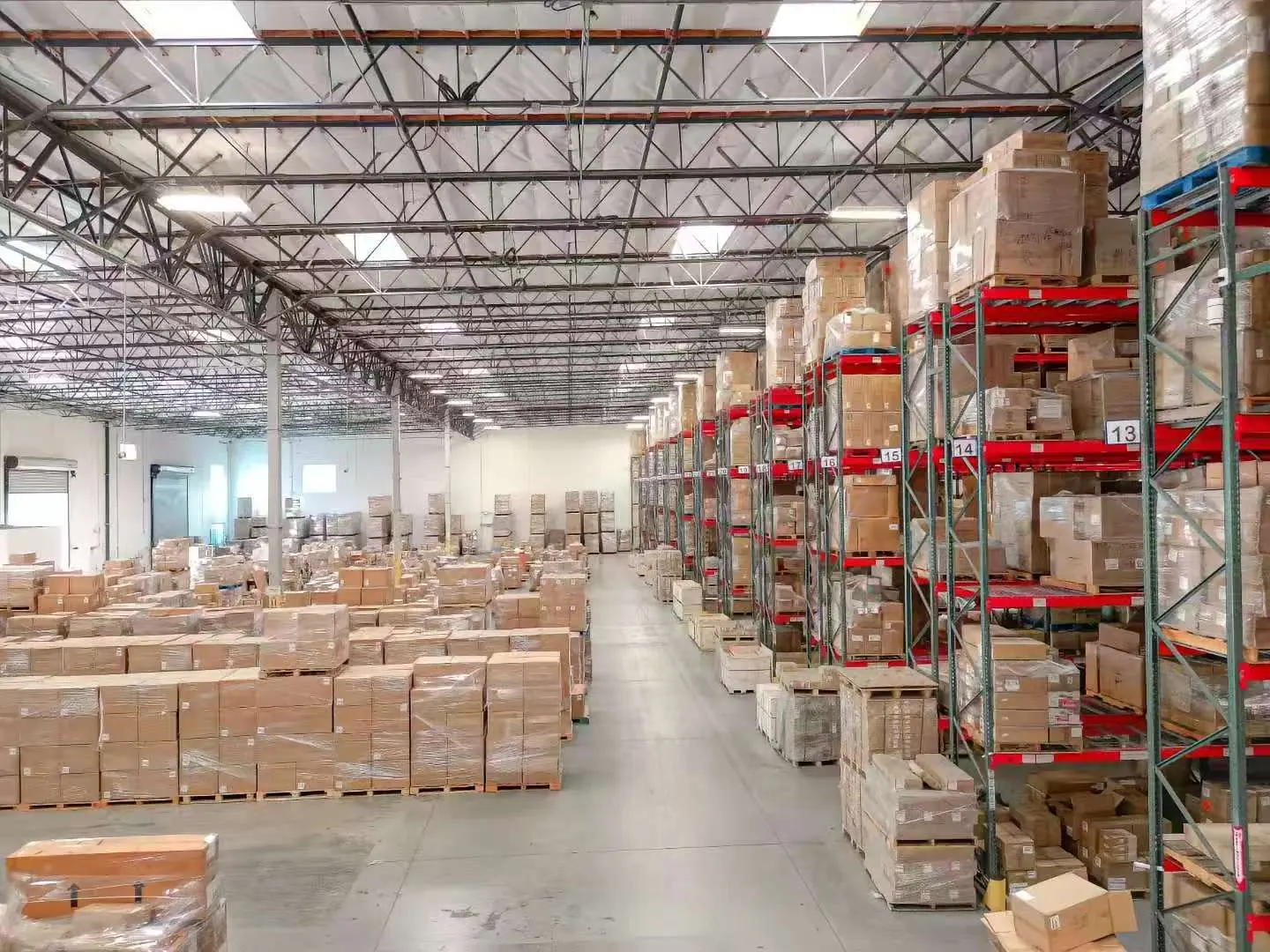
To consolidate shipments from multiple suppliers in China, you have each supplier deliver to one warehouse by a fixed date. The warehouse checks each delivery against its purchase order, labels and packs each SKU as needed, and then ships everything together under one freight booking. Instead of managing several small shipments with separate paperwork, you manage one. Consolidation often lowers the total cost per unit, simplifies customs, and gives you one place to catch problems before goods leave China.
This guide explains how the process works, where it usually goes wrong, and how to decide between less-than-container load (LCL) and full container load (FCL).
Why Consolidate
If you buy from three or four factories, each one can ship to you separately. That means several freight bookings, several sets of customs documents, and several arrivals to receive. Consolidation replaces that with:
- One booking. One freight quote, one shipment to track, one set of export and import documents.
- Fewer minimum charges. Small shipments often pay minimum fees per booking. Combining them can reduce how many times you pay those.
- One inspection point. Every supplier’s goods pass through the same receiving check before shipping.
- Better container use. Combined volume may reach the point where a full container is the better option.
- Simpler destination receiving. Your warehouse or Amazon receives one organized shipment instead of several scattered ones.
How the Process Works
| Step | What happens | What you need to provide |
|---|---|---|
| 1. Set a delivery deadline | All suppliers are given one date to deliver to the warehouse | Warehouse address and deadline in each PO |
| 2. Supplier delivery | Each factory delivers its goods with a packing list | Supplier contacts and expected dates |
| 3. Receiving check | Cartons and units are counted and checked against the PO | Copy of each PO with SKUs and quantities |
| 4. Inspection | Visual check, AQL sampling or 100% inspection | Your quality criteria or reference samples |
| 5. Labeling and prep | Each SKU gets its FNSKU or product label, bagging if needed | Label files or FNSKU list |
| 6. Repacking | Goods are packed into single-SKU or mixed cartons | Carton plan and destination requirements |
| 7. Booking and loading | One shipment is booked and loaded | Incoterm, destination and delivery address |
The Receiving Check Against Each PO
The receiving check is the most important step. Each supplier’s delivery should be compared against its own purchase order:
- Number of cartons received vs the supplier’s packing list.
- Number of units vs the PO quantity.
- Correct SKU, color, size and variant.
- Visible damage to cartons or units.
- Correct product packaging and any required markings.
Problems found here can be fixed with the supplier while the goods are still in China. Once goods arrive at the destination, the same problem is much harder to resolve. Ask for a receiving report for each supplier so you have a record of what arrived.
Labeling Each SKU
When goods from several factories travel together, clear labeling keeps them from being mixed up. Each SKU should carry the right label for its destination. For Amazon, that is usually an FNSKU label on every unit, and for some brands, Transparency codes. For your own warehouse, a SKU barcode may be enough.
It helps to label at the consolidation warehouse rather than asking each supplier to do it. That keeps label formats consistent and puts one team in charge of checking them.
Mixed-SKU vs Single-SKU Cartons for FBA
If goods are going to Amazon FBA, carton contents matter.
Single-SKU cartons contain units of only one SKU. They are simpler for Amazon to receive and are usually the easier option when you have enough units of each SKU.
Mixed-SKU cartons contain several SKUs. They can help when quantities per SKU are small, but they require accurate box content information for each carton. Amazon’s rules on mixed cartons and box contents change, so check Seller Central before choosing this option.
Whichever you choose, every carton needs an FBA carton label that matches its actual contents.
LCL vs FCL
With LCL, your goods share a container with other shippers’ cargo, and you pay based on volume (CBM) and weight. With FCL, you book a whole container.
As a general rule, LCL makes sense for smaller volumes, and FCL becomes more attractive as volume grows. Roughly 13 to 15 CBM is often where FCL starts to make sense, depending on current rates, the route and the destination charges. Consolidation can push your combined volume past that point, where shipping separately would not.
FCL can also mean less handling, since the container is not opened to separate other cargo. LCL can involve extra consolidation and deconsolidation steps at both ends. Get quotes for both options once you know the combined volume.
Timing and Supplier Delivery Deadlines
Consolidation only works if all suppliers deliver on time. If one is late, you either wait, which delays everything, or ship without them, which may mean a second booking.
Practical ways to keep timing under control:
- Put the warehouse delivery date in each PO, not just the production date.
- Leave a buffer between the latest supplier deadline and the planned shipping date for receiving, inspection and labeling.
- Ask suppliers for production updates before the deadline, not after.
- Decide in advance what happens if a supplier is late: wait, or ship the rest.
- Plan around Chinese public holidays, especially Chinese New Year, when many factories close.
FAQ
How do I get several Chinese suppliers to ship to one warehouse?
Give each supplier the consolidation warehouse address and a delivery deadline in the purchase order. Ask them to send a packing list with each delivery so it can be checked on arrival.
What if one supplier delivers the wrong quantity?
The receiving check should flag it against the PO. You can then ask the supplier to make up the shortage or correct the goods while everything is still in China.
Is it cheaper to consolidate shipments?
Often, because you make one booking instead of several and may reach the volume where FCL is worthwhile. The actual saving depends on volumes, rates and routes, so compare quotes for consolidated and separate shipments.
Can consolidated goods go straight to Amazon FBA?
Yes, if every unit and carton is labeled and packed to Amazon’s requirements before shipping. Check Seller Central for current carton and labeling rules.
Consolidation in Shenzhen
Our warehouse in Longhua, Shenzhen receives goods from multiple suppliers, checks each delivery against its PO, labels and repacks as needed, and ships them together. See warehousing and consolidation for how it works. For delivery to a door or FBA warehouse with duties handled, see DDP door-to-door shipping.