
Compliance Guide
How to Find the Right HS Code for Goods from China

By Alice Wu, CEO & Founder · Editorial policy Published
Short answer
To find an HS code, describe the product by material, function and form, then work down from the chapter to the 4-digit heading and 6-digit subheading using the legal notes and the General Rules of Interpretation. Then add the national digits from the destination country's tariff, such as the US HTS or EU TARIC, and confirm with a licensed customs broker.
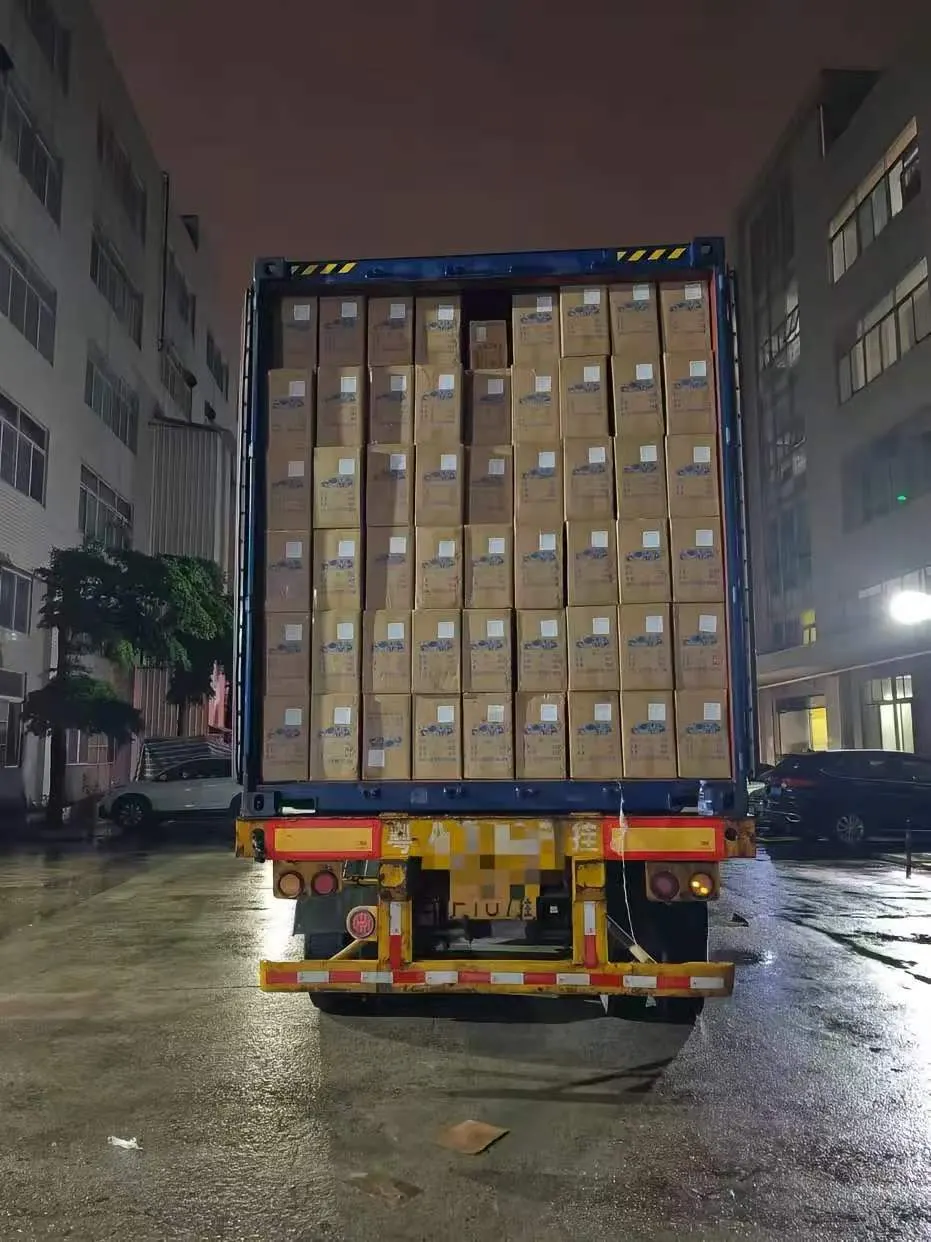
If you want to know how to find HS code numbers for goods from China, start with a precise product description and work through the destination country’s official tariff from the chapter down to the full national code. The first 6 digits are the same in almost every country, but the digits after that are set by the importing country, so the final code must come from that country’s tariff, not from your supplier’s paperwork. The process follows a fixed set of legal rules, and with practice it becomes routine.
This guide explains how HS codes are built, the step-by-step method, the official tools, and where importers usually go wrong. It is general information, not legal advice. Confirm your classification and duty rate with the official tariff tool or a licensed customs broker.
How an HS Code Is Structured
The Harmonized System (HS) is maintained by the World Customs Organization. It groups goods into sections and chapters, then narrows them down level by level.
| Level | Digits | Who sets it | Example meaning |
|---|---|---|---|
| Chapter | 2 | International (HS) | Broad product group |
| Heading | 4 | International (HS) | Product type within the chapter |
| Subheading | 6 | International (HS) | More specific product type |
| National tariff line | 8 | Importing country | Duty rate line |
| Statistical or measure suffix | 10 | Importing country | Statistics, quotas, extra measures |
Each country extends the 6-digit code in its own way:
- United States: the Harmonized Tariff Schedule (HTS) uses 10 digits. The first 8 set the duty rate and the last 2 are statistical.
- European Union: the Combined Nomenclature (CN) uses 8 digits. TARIC extends it to 10 digits to cover measures like anti-dumping duties and quotas.
- United Kingdom: the UK Global Tariff uses a 10-digit commodity code for imports.
- China: export declarations use a 10-digit Chinese code built on the same 6-digit base.
Step-by-Step: How to Classify a Product
Step 1: Describe the product properly
Before opening any tariff, write down:
- What it is made of, and the main material by weight or value
- What it does
- How it works, such as electric, manual or battery powered
- Whether it is complete, unassembled or a part
- Whether it is sold as a set
Vague descriptions like “household item” or “accessory” lead to wrong codes. Ask your supplier for a spec sheet if you don’t have one.
Step 2: Apply the General Rules of Interpretation
Classification follows six General Rules of Interpretation (GRIs). They are applied in order. In plain terms:
- GRI 1: Classify by the wording of the 4-digit headings and the section and chapter notes. Most products are settled here. Chapter titles are only a guide and have no legal force.
- GRI 2: An incomplete or unassembled item is classified as the finished item if it already has the essential character of it. This rule also covers mixtures and combinations of materials.
- GRI 3: If two headings seem to fit, use the most specific description first. If that doesn’t settle it, classify by the material or component that gives the product its essential character. If still tied, use the heading that comes last in numerical order.
- GRI 4: If nothing fits, use the heading for the goods the product is most similar to.
- GRI 5: Fitted cases and normal packaging are usually classified with the goods they hold.
- GRI 6: Choose the subheading using the same logic, comparing only subheadings at the same level.
Step 3: Read the notes, not just the headings
Section and chapter notes often exclude products or define terms. A product that seems to fit a heading can be excluded by a note. Always read the notes for the chapter you land in.
Step 4: Add the national digits
Once you have the 6-digit subheading, move to the destination country’s tariff and pick the 8- or 10-digit line that matches. This is where duty rates, extra duties and import measures are attached.
Step 5: Check for extra duties and measures
The base duty rate isn’t always the full story. Some goods from China face additional duties or measures in the destination country. Check the full tariff entry and any notes linked to it, and confirm with a broker.
Official Lookup Tools
Use official tools, not third-party sites, as your final reference:
- United States: the USITC Harmonized Tariff Schedule search for codes and duty rates. CBP’s CROSS database holds published classification rulings you can search for similar products.
- European Union: the TARIC database on the European Commission’s taxation and customs website.
- United Kingdom: the UK Trade Tariff for commodity codes and duty rates.
Searching past rulings is one of the most useful steps. If customs has already ruled on a similar product, you can see the reasoning and the code it chose.
Illustrative Example: A Stainless Steel Water Bottle
The table below shows how the method works for one product. It is an illustrative example only. Your product details may change the result, and you must verify the code and duty rate in the official tariff for your destination country.
| Step | Question | Answer for this example |
|---|---|---|
| Product description | What is it? | Double-wall stainless steel bottle, vacuum insulated, with a plastic screw lid |
| Function | What does it do? | Keeps drinks hot or cold |
| Candidate headings | What could fit? | 9617 (vacuum flasks and other vacuum vessels) or 7323 (household articles of iron or steel) |
| Deciding rule | Which applies? | GRI 1 and GRI 3(a): heading 9617 specifically describes vacuum vessels, so it is more specific than a general household article heading |
| 6-digit result | International subheading | 9617.00 |
| If not vacuum insulated | Does the result change? | Yes. A single-wall steel bottle would likely fall under household articles of stainless steel in heading 7323 |
| National digits | Final code | Look up in the destination tariff, such as US HTS or EU TARIC |
The example shows why the product description matters. One feature, vacuum insulation, moves the product to a different chapter.
Why the Chinese Export Code May Differ
Your supplier or forwarder in China files an export declaration with a 10-digit Chinese code. The first 6 digits should normally match your import code, because both follow the HS. The last digits are Chinese national digits and mean nothing in the US, EU or UK tariff.
Even the first 6 digits can differ sometimes. Reasons include:
- The exporter chose a code based on a different product description.
- The goods were declared under a broad code for convenience.
- Countries can interpret the same HS text differently.
The importer is responsible for the import classification. Use the Chinese export code as a starting point at most, and classify the goods yourself under the destination tariff.
The Risks of Misclassification
A wrong code can cause problems even if it was an honest mistake:
- Underpaid duty, which customs can claim back later, often with penalties or interest
- Overpaid duty, which is money you may not get back without a formal claim
- Shipment holds and inspections when the code doesn’t match the goods
- Missed requirements, because licenses, safety rules and extra duties are linked to specific codes
- Repeated errors across every shipment until someone notices
If you ship the same products regularly, a correct code pays off on every entry.
Binding Rulings for Certainty
If a product is hard to classify, you can ask customs for a binding ruling before you import:
- United States: you can request a binding ruling from CBP. Published rulings appear in the CROSS database.
- European Union: a Binding Tariff Information (BTI) decision is valid across EU member states.
- United Kingdom: you can apply to HMRC for an Advance Tariff Ruling.
A ruling takes time, so apply well before your first shipment. It applies to the specific product described, so a design change may need a new ruling.
The Role of Your Broker and Forwarder
A licensed customs broker in the destination country can classify goods, file entries and advise on duty. A freight forwarder moves the goods and coordinates documents, and on DDP shipments arranges import clearance through its partners.
Give both of them full product details, photos and spec sheets. They classify based on what you tell them. On DDP shipments, duties are part of the landed cost, so the code directly affects your quote. Our guide to China freight shipping cost explains how duties fit into the total.
Frequently Asked Questions
Can I just use the HS code my Chinese supplier gives me?
Use it as a starting point only. The supplier’s code is a Chinese export code, and its national digits don’t apply in your country. You are responsible for the import classification, so confirm it in your destination tariff.
Is the 6-digit HS code enough to clear customs?
No. Import declarations need the full national code, which is 8 or 10 digits depending on the country. The 6-digit code only gets you to the right subheading. The duty rate and import measures sit at the national level.
How do I classify a product made of several materials?
Start with GRI 1 and the chapter notes, since some headings cover the product regardless of material. If two headings still fit, GRI 3 applies: the most specific heading first, then the material or component that gives the product its essential character.
How do I classify a set of different products sold together?
Sets put up for retail sale are often classified by the item that gives the set its essential character, under GRI 3(b). Not every group of items counts as a set, so check the notes and look for past rulings on similar sets.
Do I need a new HS code if I change the product design?
Possibly. A change in material, function or power source can move a product to a different heading. Re-check the classification whenever the design changes in a way that affects how the product is described.
How We Can Help
We ship goods from China on DDP, DAP, FOB or CIF terms and coordinate export documents and import clearance with brokers in the destination country. Share your product details early so the code can be confirmed before booking. See our DDP door-to-door shipping service or contact us for a quote.