
Compliance Guide
Amazon Transparency Program: Cost and How to Enroll

By Alice Wu, CEO & Founder · Editorial policy Published
Short answer
The Amazon Transparency Program is a brand protection service that puts a unique, scannable code on every unit of an enrolled product. Brands need Brand Registry, a GTIN for each product and the ability to code every unit they make. There is no enrollment fee. You pay a per-code fee that drops as annual volume rises.
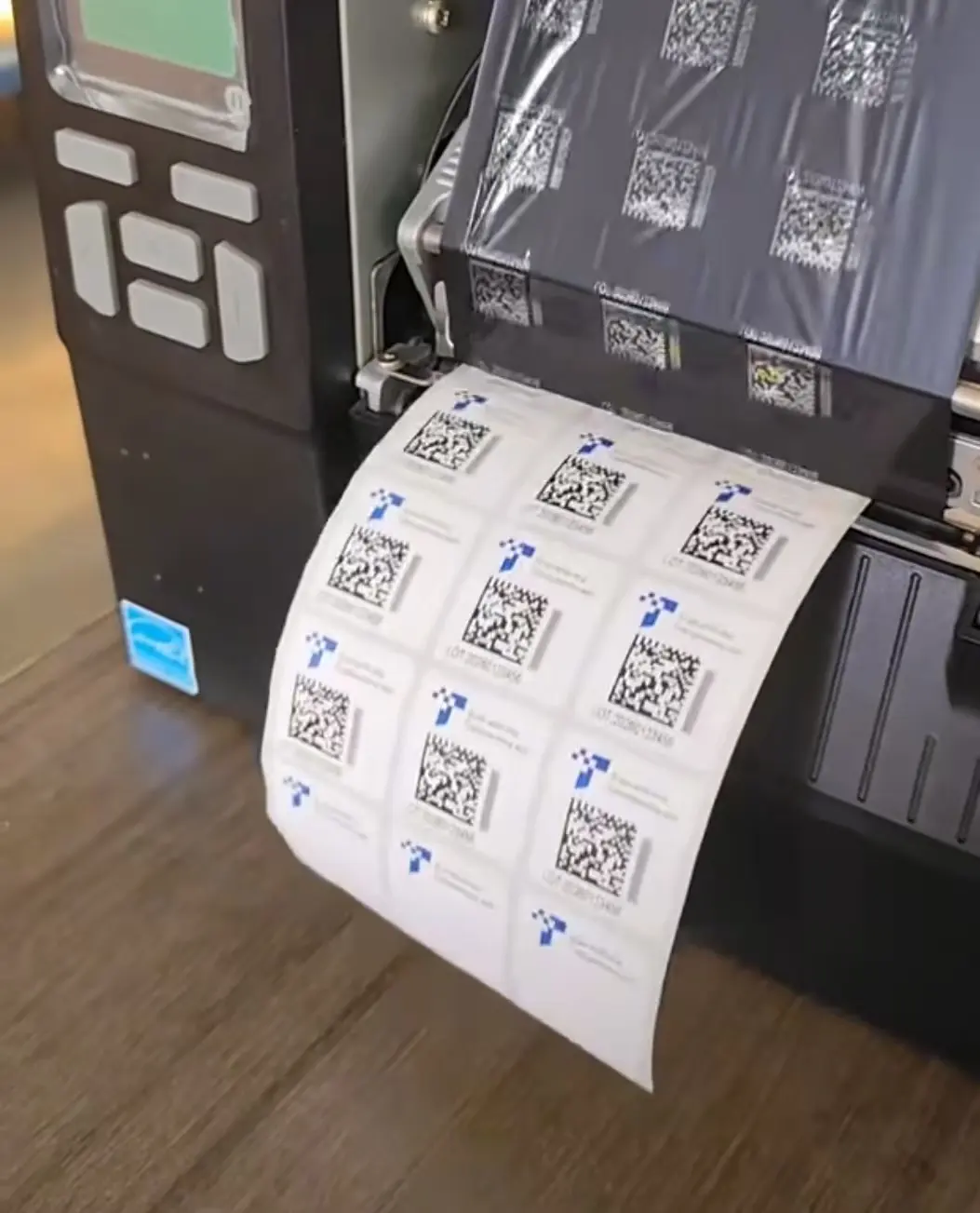
The Amazon Transparency Program is an anti-counterfeit service that gives every unit of an enrolled product its own unique code. Amazon scans that code before the unit ships to a customer, and units without a valid code can be stopped. To join, you need Brand Registry, a GTIN for each product, and a way to put a code on every unit you make. Amazon does not charge to enroll. You pay per code, and the per-code price falls as your annual volume grows.
This guide covers who can join, the enrollment steps, how the cost works, the label options, and the mistakes that cause trouble after launch.
What the Transparency Program Does
Most Amazon barcodes identify a product type. An FNSKU, for example, is the same on every unit of one listing. A Transparency code is different. Each code is issued for one unit only.
Once a product is enrolled and protections are active, Amazon checks the code on each unit in its network. A unit with a missing, invalid or already-used code can fail the check. That makes it hard for counterfeiters or unauthorized sellers to move fake units through Amazon, because they cannot produce valid codes.
Customers can also scan the code with the Amazon Shopping app to check that a unit is authentic. Brands can add unit-level details such as manufacturing date or place.
Who Is Eligible
According to Amazon’s Transparency page at the time of writing, a brand needs:
- Brand Registry with the rights owner role for the brand
- An active, registered trademark for the brand
- A GTIN for every product you enroll, such as a UPC or EAN
- The ability to apply codes to every unit you make, wherever that unit is sold
The last point is the one brands underestimate. Transparency is not limited to the units you send to Amazon. If you sell the same GTIN through retail stores, your own website or distributors, those units need codes too. Otherwise a genuine unit from another channel can later fail a check when someone tries to sell it on Amazon.
Eligibility also depends on the country of the brand. Amazon lists the regions it supports on its Transparency page, and that list changes over time.
How to Enroll, Step by Step
The process Amazon describes has four stages.
1. Enroll the brand and products
Sign in with your Brand Registry credentials and apply on the Amazon Transparency page. Choose the products (by GTIN) you want to protect. You do not have to enroll every product at once. Many brands start with the listings that have the most counterfeit or hijacker problems.
2. Get codes onto units
Order codes in the Transparency portal and decide how they will be applied. You can print labels yourself, use a label printer or packaging supplier, print codes directly on your packaging, or connect serial codes you already use. More on these options below.
3. Pass the operational review
Protections are not switched on right away. Amazon runs an operational performance review to confirm that your units arrive with valid codes. For FBA sellers, this review is started from the Transparency portal. Until it is passed, the product is not protected.
4. Manage protections
After activation, every unit needs a valid code to pass checks. The portal shows scan results and flags problems, so you can see if a supplier or warehouse has missed units.
How the Cost Structure Works
Amazon states that there are no enrollment, subscription or minimum fees. The cost is a per-code fee, charged when you order codes.
The fee is tiered by cumulative volume within an annual period. As published by Amazon at the time of writing, the US tiers were:
| Codes generated in the annual period | Price per code (as published by Amazon) |
|---|---|
| 1 to 1,000,000 | $0.05 |
| 1,000,001 to 10,000,000 | $0.03 |
| 10,000,001 and above | $0.01 |
These figures change and can vary by region. Check the current terms in the Transparency portal before you budget.
A few points about how the structure works:
- Volume resets each year, based on your account creation date, not the calendar year.
- Tiers are cumulative. Codes ordered across all your products count toward the same total.
- Adding or removing products from the program is free, according to Amazon.
- You pay for codes, not for sales. Codes you order but never use still count, so order in line with real production plans.
The code fee is not the whole cost. Budget for label stock, printing, and the labor to apply and check a code on each unit. If codes are printed on packaging, the cost moves into your packaging run instead. For prep and printing costs on our side, see our pricing page.
Code Formats and Label Options
Transparency codes are 2D codes, and each one carries a unique serial value. Amazon gives you code files to print from, or lets you connect your own serial codes if they meet its rules (for example, a unique code for each unit of a GTIN, in a scannable format, placed on the same side of the packaging as the GTIN).
There are two main ways to put codes on units.
| Option | How it works | Best for | Watch out for |
|---|---|---|---|
| Separate sticker | Codes printed on labels and applied to each finished unit | Existing stock, small or mixed runs, products already packed | Labor per unit, placement near the GTIN, label left off a unit |
| Printed on packaging | Codes printed directly on the box or sleeve during the packaging run | High-volume products with stable packaging | Needs variable-data printing, a fixed code sequence, and spoilage tracking |
Stickers are the usual starting point because they work with packaging you already have. Printing on packaging can make sense once volumes are steady, but every printed piece holds a unique code, so damaged or unused boxes need to be tracked.
Whichever you choose, the code should sit where it can be scanned without opening the product, close to the existing barcode, and not over a seam, fold or curve. A separate sticker must not cover your UPC or FNSKU.
Common Mistakes
Most Transparency problems come from how codes are handled in the supply chain, not from the program itself.
Codes not applied to every unit
A factory or warehouse labels most of a batch but misses some units. Those units may fail Amazon’s check. This often happens when a batch is split across two packing lines or when replacement units are added late.
Duplicate codes
The same code is printed or applied twice, for example after a reprint, a file being loaded twice, or a roll being restarted from the beginning. Only one of the two units can be valid. Each code should be scanned and recorded so a repeat is flagged. We explain how that check works in our post on barcode scan verification for FBA labels.
Codes on the wrong unit
Each code is tied to a GTIN. If codes for the blue variant go on the red variant, the code is valid but the unit is wrong. Keep code files separated by GTIN and label one variant at a time.
Forgetting other sales channels
Units sold outside Amazon without codes can later appear on Amazon and fail checks. Plan coding for your full production, not just your FBA shipments.
Ordering far too many codes
Because you pay per code, over-ordering adds cost with no benefit. Order codes for confirmed production runs.
Who Applies the Codes
Codes can be applied at the factory, at a prep center, or by the brand. What matters is that someone takes clear ownership of three things: every unit gets a code, no code is used twice, and the code matches the GTIN. If codes are applied after goods leave the factory, the prep step needs to happen before cartons are sealed for Amazon. Our page on Transparency label application explains how we handle that alongside FNSKU labels.
Frequently Asked Questions
Is there a fee to join the Amazon Transparency Program?
According to Amazon, there is no enrollment, subscription or minimum fee. You pay a per-code fee when you order codes, and the rate depends on your annual volume and region. Check the current terms in the Transparency portal before you budget.
Do I need Transparency codes on units I sell outside Amazon?
Amazon’s eligibility rules require you to be able to code every unit you make, wherever it is sold. If uncoded units from other channels end up on Amazon, they can fail checks. Most brands code the full production of an enrolled GTIN.
Can Transparency codes be printed directly on my box?
Yes. Amazon lists printing on packaging as one of the ways to apply codes. It needs variable-data printing so that each box carries a different code, and you need to track spoiled or unused boxes.
Does a Transparency code replace the FNSKU or UPC?
No. The Transparency code is an extra code for brand protection. Your product still needs its GTIN, and FBA units still need an FNSKU unless they are eligible to use the manufacturer barcode. The Transparency label should not cover either one.
When does protection start after I enroll?
Protection starts after your product passes Amazon’s operational performance review. Until then, codes may be scanned but the product is not yet protected. Plan the review into your launch timeline.
How We Can Help
We print Transparency code labels in-house from the code files you download from Amazon, then apply and scan them on every unit in our Shenzhen warehouse. See our label printing service for print options and our Transparency label application page for how codes are applied and checked before your goods ship to Amazon.